Midsommar: A Mirror to Spiritual Death
Ari Aster's horror movie of drugs, drift and death exposes the emptiness of our culture.
Goriwei
If the 2019 film Midsommar were a mirror into which we were to gaze, a horrifying visage would stare back; it shows us what we have become.
While director Ari Aster may well have first envisioned the film as straight forward slasher schlock, what he ended up with was an important cultural commentary, a societal artefact, that reflects the zeitgeist. He was no doubt helped by superb performances from the main cast, especially from Florence Pugh, as Dani Ardor, who encapsulates the societal sickness in which we wallow.
While every horror-film reflects the society in which it is created and the particular cultural milieu in which it is produced, Midsommar unpeels the cultural and spiritual fruit of our obsessions and warns of a life bereft of meaning. It stands as a bookend to the films from the 60s and 70s like The Wicker Man or Rosemary's Baby. The Wicker Man still had faith in science and saw religion as a means of controlling people. Midsommar has no such pretensions, shining a spotlight on the purported antidotes to a modern life that has no meaning outside of the drugs and one-upmanship games that make it bearable.
The Student as Drifter
So many slasher movies start with a babysitter, a young girl in a strange house, inviting her boyfriend over to keep her company. Midsommar, however, was made for a society when you wouldn't trust a stranger with your child. Rather it starts with someone far from home: a student who, being physically displaced from her family, is unable to find support emotionally and with her mental health.
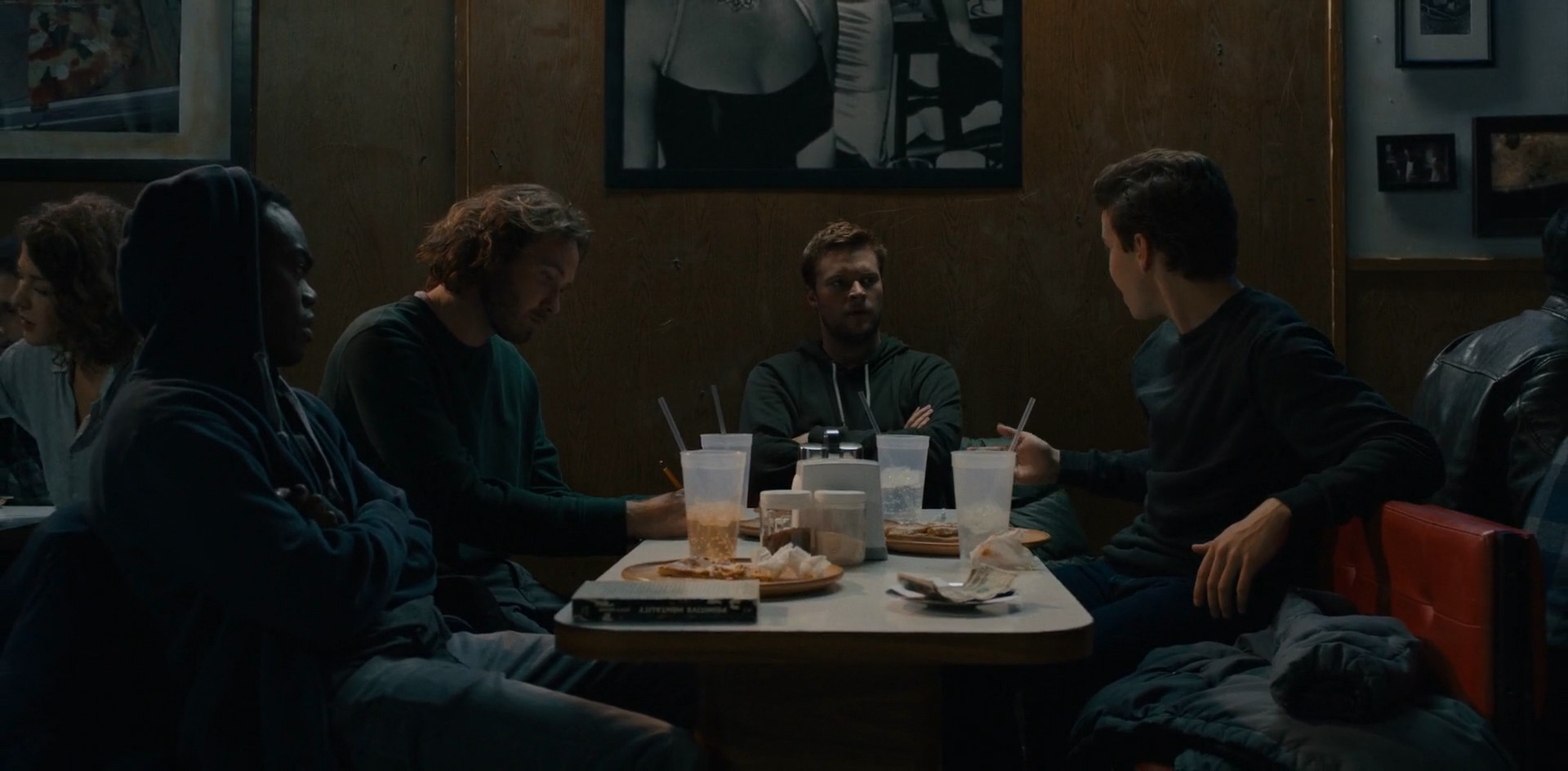
When we first see Dani, she is on her mobile phone or in front of her computer. She receives a disturbing message from her bipolar sister, Terri. Unable to reach Terri or her parents she calls her boyfriend, Christian, who is at a bar with his friends. The interplay between Dani and Christian, and the advice he gets from his friends, speaks of directionless drift and the lack of passion between Dani and Christian. Much of the dialogue is familiar to us; a man unwilling to commit and a woman hoping to talk him around. She plays the passive aggressive girlfriend very well - trying to force him into commitment, but at the same time not willing to break it off. There is no indication that she likes Christian, let alone loves him. Dani never tries to mend the relationship; rather, she keeps testing Christian. He, neither committing to it nor ending it, comes across as weak and indecisive. His friend advises him to find a girl that won't make him jump through hoops for sex.
Apart from both being students, these deracinated people don't really have anything in common, and they have no community support to mend their relationship; rather, the opposite. For Christian, the relationship is just too much trouble. For Dani, this means that she is surrounded by people who don't like her. Consequently, her attempts at a relationship fail even by the standards of what a barren, meaningless relationship looks like in the early 21st century.
We are shown Terri in a room that is piled high with books; it's as if she were overwhelmed by academia. This imagery signifies isolation. The characters are just drifting; the talk of studies and theses lack passion, because they are just strolling from one way point to the next. Is the lack of purpose because of drugs? Or are drugs causing the lack of purpose?
Drugs, or psychotropics, are a theme of the film. The first time we see Dani speaking to Christian, he says he's "just smoking some resin". We then see Dani taking Ativan, a brand name of lorazepam, a benzodiazepine that is most commonly prescribed to combat anxiety and panic attacks.
Soon after the first reference to drugs, we see the murder-suicide by carbon monoxide poisoning. Did Terri not take her meds? Did she indulge in psychotropics that made her condition worse? Were her parents so peaceful because they had been knocked out with sleeping pills?
Dani's pain and isolation is redoubled by not being informed that Christian and his friends have organised a trip to Sweden, having been invited by their colleague Pelle to his community of Hårga for the midsummer celebrations. She manages to wheedle her way into getting invited by guilting Christian. The writing and acting of the distraught, passive-aggressive Dani and the weak Christian is top-tier largely because, one suspects, Aster and the actors were all too familiar with these sorts of situations.
The Nordic Revival, Woodstock and Ethno-Nationalism
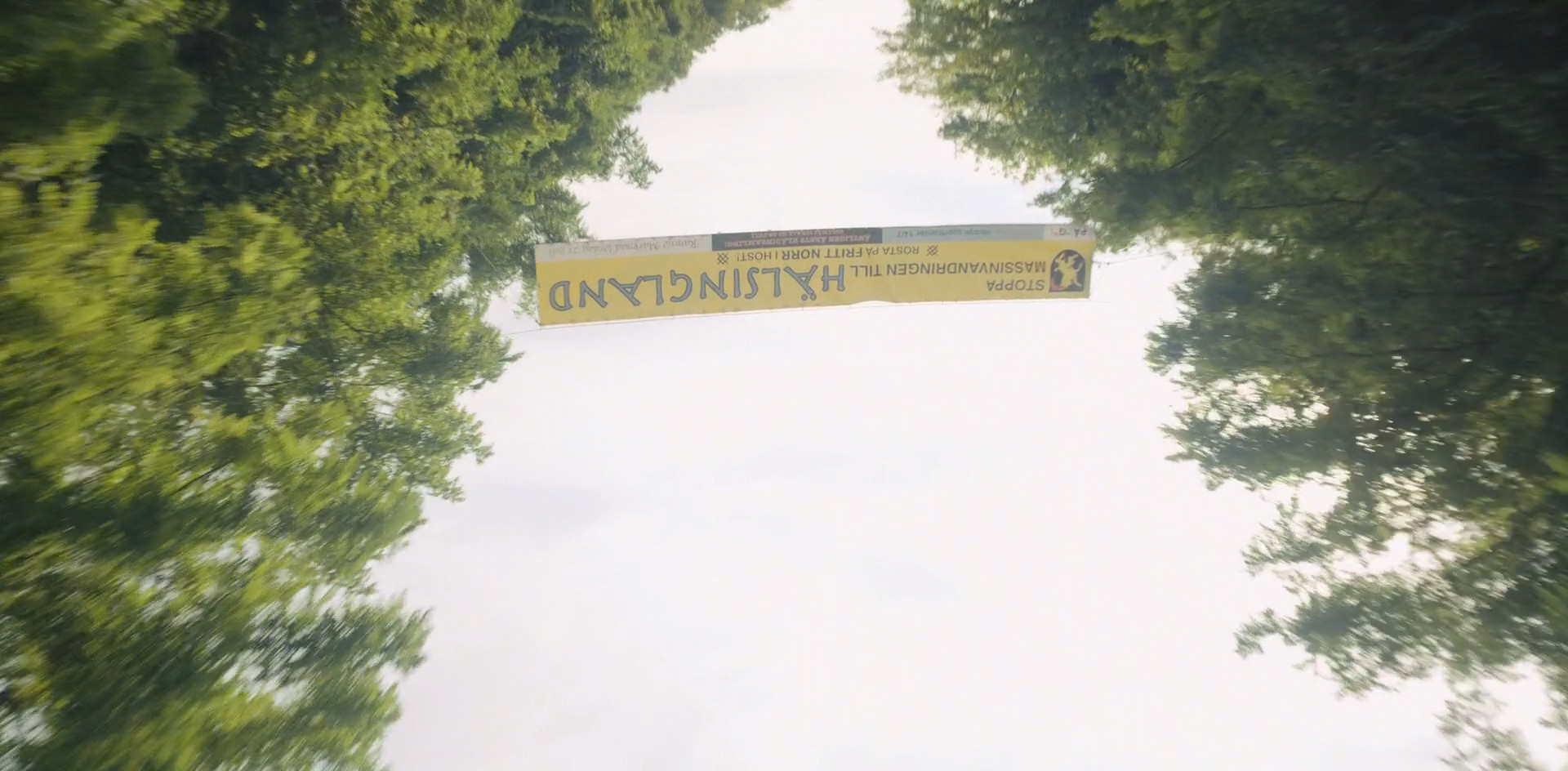
Midsommar was released when all things Nordic were trendy. The TV series Vikings had been running since 2013, the video game The Elder Scrolls V: Skyrim had been released in 2011 and several MCU films featuring Nordic mythological characters were in the public consciousness. At the same time, Nordic pagan metal and folk metal hit the scene, with bands like Wardruna, Heilung, Faun and many more. Some of the public internalised these products of the corporate media and showed their submission to the Norse gods by wearing mjölnir necklaces and openly declared this as their faith. At least one of these pagan bands, Heilung, said their concerts were rituals where the remains of living things were used, sometimes as instruments. Those who styled themselves as Nordic or Anglo-Saxon ethno-nationalists, of course, were prone to claim that they would follow the gods of their ancestors.
So by 2019, the scene was well set for a film which gave prominence to one of Sweden's most important festivals, re-imagining it in a very pagan way that was likely to garner some box-office success.
In a culture somewhat familiar with Nordic mythology, but steeped in the idealised hippy culture of the 1970s, the expectation of both the audience and of the American characters, that is, the dope-smoking children of hippies, is that Hårga is going to be like a crystal-worshipping hippy commune where people dance naked in the woods.
Expectations that it will be a mythologised Woodstock are affirmed when they have to consume psychedelic mushrooms before they are allowed to enter the community. Dani has a bad trip, but when it is over, the commune/hippy impressions are reinforced by the smiles and flute music that is played when they enter. The viewer must ask, however, whether the trip ever ends.
The theme of drugs and altered reality never stops. Dani asks for sleeping pills from Josh every night. This is never questioned; having trouble sleeping is part of the modern condition.
Drug use continues and drugs are used throughout the Hårga community. We know that many shamanic cultures used psychedelics. In addition to psilocybin, there would have been fly agaric, hemp, henbane, alcohol as well as various thujone-containing plants among others.
All these things enable people to behave in ways that they would not normally, whether that is to make them amenable to suggestion, to dance uncontrollably or perform sexually.
The Hårgans use drugs for sedation, arousal, and as part of rituals. Whereas the students use them as coping strategies, the Hårga use of drugs is targeted and purposeful.
Academic Arrogance and Orientalism
The first sign that the community might not be like Woodstock is when two elders voluntarily sacrifice themselves by throwing themselves off a cliff. Two of the characters, Josh and Christian, want to stay because, as anthropology students, they see this as something to write a thesis about; the Hårgans are curiosities for which they can get academic accolades and awards.
They place themselves above the Hårgans. They think they can apply their human intellect to the culture and characterise it. It is exactly the complaint of "orientalism" that western colonialists thought they could categorise other cultures as items of curiosity and put them in compendia of anthropology, without ever understanding them.
Their arrogance extends to not ever believing that they are in danger. If this community is quite happy to see their elders commit suicide, what else might they do? The arrogant academics never stop to think. It's as if the Hårgans can see into these people's souls and have their fates planned. The academic arrogance is a death sentence.
The Hårgans, through drugs and physical coercion, force Christian to have sex with a young girl, Maja. What follows is a disturbing scene of forced intercourse. It is clearly a deconstruction of rape and pornography, but more than that, Aster shows us the horror of loveless sexual intercourse; the intercourse of the nightclub and the one night stand. In our world, "sex" has become horrific. It's an indictment of our society's obsession with sex without love. Maja, though, got what she wanted. In a film which is deliberately not subtitled, she says, after Christian finishes, "Jag känner barnet", "I feel the child."
Purification by Fire
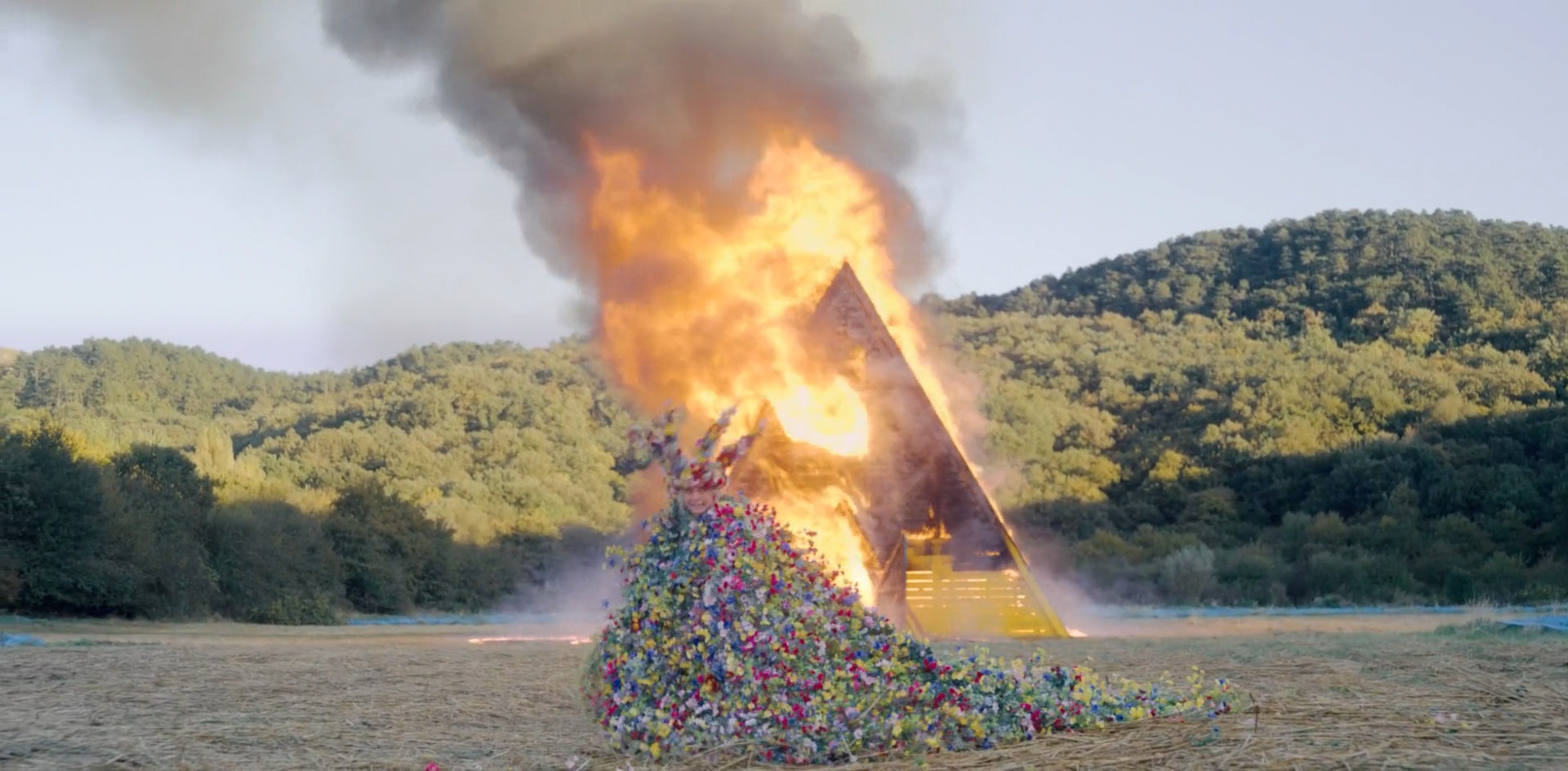
Dani, having been given a drink that contains a substance that we know not what, dances manically around a maypole. Being the last one standing, she is elected May Queen. The May Queen then selects who should be sacrificed by immolation, either a volunteer from the local community or Christian. She chooses Christian. Whether this is because she saw him having forced sex with Maja or because having continuously been rejected by him and being selected as a celebrity in this community, she seeks to take revenge on a weak and ignorant man whom she never loved. We can only guess.
The film starts with death by the gases of combustion and ends with death by fire. Not only Christian, but body parts of the group are burned along with two volunteers from the community. It underlines the difference between the outsiders, who consider the community either an academic curiosity or else a sick joke, and the locals, who take the rituals and human sacrifice seriously.
But what are we, the denizens of the west in the 21st century, to make of this? Are the Swedish barbarians right? Does paganism lead to human sacrifice? The spiritual entities the pagans worship are transactional; you offer them something and they may bestow benefits on you. The offering might be a stick of incense, a libation of wine or olive oil, it might be fruit, it might be an animal, or it might be a human. Neo-pagans' protestations notwithstanding, we know of the reality of pagan human sacrifice. We know of Gamla Uppsala where animal and human remains proliferated. We know that people were sacrificed by being thrown into bogs. We know of the sacrifices by the Carthaginians, the Phoenicians and, protests to the contrary, we know that Greco-Roman society knew of it. Agamemnon's desire to sacrifice his daughter, Iphigenia, might only be a story, but the martyrdom in Pergamon of Antipas, sacrificed to Zeus, is not.
Can Moderns understand Ritual? Does this film?
Aster, though, seems unable to present properly the pagan society. He has the newcomers participating in the rituals even though they don't know what the rituals are and may perform them wrongly. This makes it all a bit incoherent. Perhaps Aster hasn't actually thought them through. It's understandable, because Aster himself is probably just one of us, a modern 21st century man, who can't understand a spiritual society and can't properly bring it alive. The end result is confusing. Nonetheless, this Swedish neo-paganism sits in juxtaposition to the material atheist world that Aster, and, he assumes, the audience inhabit. Was Aster's aim to take a swipe at those white nationalists who lean to paganism and are just as obsessed with genetics and bloodlines as the inhabitants of Hårga are? And will this lead them to human sacrifice? The swipe, at once, hits home, but also misses to the extent that Aster himself doesn't have proper respect and understanding for spiritualities that aren't his own. Ironically, in his critique of Orientalism, he ends up committing the same orientalist sin as Josh and Christian.
The movie is too long and because neither we nor the newcomers to the Hårga understand the rituals, there needs to be exposition which slows the plot down. Yet, even with these expositions, the rituals don't really make sense. It's as if Aster doesn't truly understand the subject matter that he is presenting.
Despite these faults, Midsommar is one of the most important films of the 21st century so far. It speaks of societal decline, where social bonds are broken and young people, adrift, using the coping tools of drugs, superficial studies and meaningless relationships, can be easily led away by a tight-knit community for whom social cohesion and loyalty are paramount. It's their rituals that bind them. Modern society cannot compete. Dani is only happy when she is accepted by them; she was rejected by all in the modern world, but made a queen by the Hårga.
Midsommar is a mirror held up to us. It shows the end destination of our drug use and our sexual obsessions. The film is a horror that tells us what we have become. Midsommar is a warning that calls for a course correction. We need to fix ourselves and society before we become what it depicts. Is it too late?