Stranger Things Killed Science. Here's How.
Netflix says institutional evil is a mere game of despair.
Goriwei
If the purpose of mainstream media is to lead you up the garden path and then dump you there dazed and confused, mollified and languishing, then the most anticipated media event of 2025, the finale of Stranger Things, achieved that admirably. It ducked the serious questions, ignored the issues and failed to mask the bitter taste it left.
MK Ultra and institutional child abuse is a key theme of the show. It was raised in season 1 and never left, because it’s the source of El’s, Kali’s and Henry’s powers. It is never explicitly stated that this abuse may also be sexual in nature, but in episode 2, “The Weirdo on Maple Street”, El has no hesitation in changing in front of the boys, indicating that privacy and modesty are not things she ever has known. Dustin quickly points this out: “She tried to get naked.” Lucas follows with: “there’s something seriously wrong in the head”. This is also hinted at by Kali’s simmering, but raw anger, in “The Lost Sister” (season 2, episode 7).
The faux-eighties nostalgia serves only to underline this theme. The 1980s were the time of the Franklin Community Federal Credit Union, Fornethy House, Cyril Smith, MP, and Cambridge House children’s hostel. In season 5, Henry says that he is abducting children because they are weak and vulnerable, thus underlining the point. None of the issues ended with the 1980s and the finale’s attempt to sidestep them is a betrayal of those who have suffered.
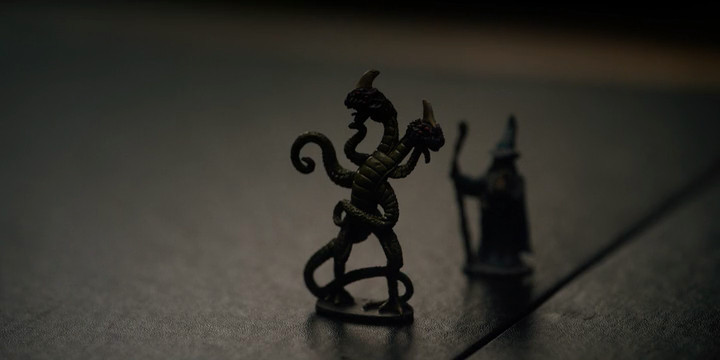
The abuse in the show is not incidental; it’s the mechanism by which the writers link science and the supernatural. In episode 2, El picks up a Dungeons & Dragons character of a wizard and says “Will”. Then she turns the board upside down and places the magician there. When asked from what Will is hiding, she places the figure of the demogorgan on the board. So El brings the issue of the supernatural to the fore; a monster that she knows of is ontologically a “demogorgan” from the game. The implication is clear, abuse, pain and extreme emotion unlock powers, open portals, summon monsters, and release extra-sensory powers.
El’s identification of Will as a wizard is prophetic. His time in the Upside Down and the pain and fear that he experienced therein, gave him a connection with the mind flayer. So by season 5, the other characters called him a wizard and he is enable to turn the powers of Vecna and the mind flayer against them.
It has been claimed that “different planes” of reality can be experienced, entities can be encountered and extra-sensory powers can be unleashed with the use of such pharmakeia, (φαρμακεία) - a word that means at once, potion, medicine, drug, poison and sorcery - as LSD, DMT, ketamine or ayahuasca. These days, this is not a fringe belief, but the worldview of the culture that produced the show. Jack Parsons, founder of the august Jet Propulsion Laboratories, and devotee of Satanist, Aleister Crowley, famously summoned the Whore of Babylon, a demon. Isaac Newton, who discovered laws of gravity, was an alchemist.
The reputed opposition between rational science and irrational spirituality is a myth that the show deconstructs and then avoids. The occult-science connection is very alive in Stranger Things. It comes together in all the protagonists, but particularly in the person of Dustin who not only is the star science student, but is obsessed with the fantasy world of Dungeons & Dragons. Throughout season 5, he wears a t-shirt with the words “Hellfire Club”. We are introduced to this club in Season 4 and, protestations not withstanding, the name of the club gives the whole enterprise a sinister feel. It’s understandable that the members of the club are bullied, although we are meant to feel sympathy for them.
The fact that the most science-obsessed students also want to play Dungeons & Dragons emphasises this science-occult nexus. Science fiction promotes the illusion that science education, even such dry topics as integration and differentiation, can offer boys adventure: spaceships, wormholes, laser guns, light sabres, conquest and getting the girl. Because that male desire for adventure never goes away, the media was able to tantalise the young. It is no wonder then that those with analytical minds wanted to leverage their abilities.
The promise, though, is hollow, a lie, even. Science can’t do interstellar space travel and opening of portals to other dimensions (pace the Stargate franchise) is the stuff dreams are made of. Human history, however, shows that many traditions have it that one may create portals and summon entities. It is no wonder that some disappointed science students turn there.
Stranger Things presents the semiotics of the meeting of worlds that it cloaks with the thinnest veneer of science. It is about how our reality interfaces with the “Upside Down”, the military industrial complex, black ops, alternate dimensions, wormholes, being in someone’s mind and in their memories. It is about whether games can be real and things can be memed into existence? Can thoughts control reality?
Stranger Things answers these questions in the affirmative, but, in doing so, it destroys science; it uncovers the fact that at the heart of science fandom is fantasy and the occult.
The adults doing science, pace the character Mr Clarke, the science teacher, are engaged in child abuse to attempt to train the children to have enhanced mental capacity. We know that there have been various “unscientific” attempts to enhancing mental capacity, whether this is through physical pain, drugs, through ritual and incantation, or, as explained in series 5 episode 5, transfusing the blood of those with special powers.
While Stranger Things does not suggest, except in the D&D game, that ritual and incantation can be used to perform magic, it says that abuse can. The children who were subject to it can bring monsters into our world; El, Kali and Henry bring their monsters into our world because of what was done to them at the hands of the government’s secret programme.
With the abused characters gone, probably dead, there are no more monsters to be summoned from the Upside Down. The implication is clear: science is abuse, but it is allowable because it opens portals, summons monsters and leads to fantastical adventures.
Of course, there are other and older explanations of things that open portals and summon monsters. It is the child protagonists themselves who most strongly make this connection. Although they enthuse about science and win prizes at science fairs, they and El name the monster, “demogorgan” because that is the name of a demon prince in the Dungeons & Dragons game that they are playing. It wasn’t only an invention of the creators of D&D, in European tradition, “demogorgan” is a demon.
In the finale, we see that, when Henry was a child, the mind flayer took him over. It counselled despair, “It showed me that this world is broken”, he says, but he accepted the possession. “I could have resisted it…but I chose to join it… It needs me and I need it… We are one,” he says. The mind flayer’s bitter counsel and Henry’s desire for power were his undoing. His need to “be as gods” caused him to be taken over by the mind flayer/hive-mind. Is not the desire to transcend one’s human limitations the main reason for succumbing to demonic oppression or possession?
The finale suggests to defeat evil, it’s enough to destroy technology: blow up the exotic matter, collapse the wormhole and destroy the lab therein. Thus will innocence be regained. With the Tree of Knowledge cut down, Adam and Eve can return to Eden, and Prometheus will be unbound. It suggests that repentance of the characters, say Henry, Dr. Brenner or Dr. Kay, is not possible, but destruction of their tools is.
Despite being steeped in the fantasy language of Dungeons & Dragons, a world of gods and demons, the writers of Stranger Things don’t allow the characters to deduce wider spiritual implications. The writers decided that the most common cuss-word would be “Jesus Christ”, which shows the characters are not merely irreligious, but hold Christianity in contempt.
There is only one church in Hawkins, a Presbyterian one. When in the Upside Down, some characters agree to wait in the crumbling church as if it were some kind of sanctuary, but curiosity, about the centre of the Upside Down, gets the better of them and they leave. The church also serves as a place to pick up radio signals because the steeple is so high. Most importantly, it serves as a backdrop to Kali’s counsel of despair while she conjures visions where the altar would have been; Kali’s rhetoric enhanced by her ability as an illusionist emphasises the spiritual weakness of that church. In the world of Stranger Things, monsters, demons, the abyss, human pride and lust all exist, but there will be no help from the Good.
In season 4, the series brings to the fore the satanic panic related to Dungeons & Dragons, in that the game could lead children to be obsessed with occult spirituality. By applying words and concepts from the D&D universe into their world, they are bringing the demonology of D&D into the science-created hell of Hawkins. Thus science and demons are allied.
With the removal of Jane/El, Kali/Eight and Henry/One, the show puts all this aside with a graduation ceremony wherein Dustin makes a clichéed speech about the jocks and the geeks coming together and using “chaotic good” to unleash innovation while he breaks societal norms by tearing off his graduation gown. It’s very trite, but it is supposed to signal a return to a comfortable ordinariness. After everything that the characters have experienced, it is impossible that they return to normalcy. They know after all, that the government engages in MK Ultra-type programs and mind control through child abuse. They know of the reality of wormholes. They know of other “dimensions”. They know it is possible to open portals to them and to the “Upside Down”. These are not things that once you know, you can “un-know”. If El could open a portal to the Upside Down, who else can? What’s preventing someone else doing it? How much of the supernatural is on point? Is the government taking occult ritual seriously?
These are all questions that the characters, including the government and military must be asking. The show, rather than grappling with issues that have been raised, side-steps them. Its brazen evasion is to end the finale with the older children finishing a role playing game and then their younger friends barging in to take over and start a new campaign. The credits run over line-drawings of the characters in a role-playing game instruction manual. It’s the ultimate cop out. The finale is unsatisfying and the viewer feels cheated. This isn’t a flaw, it’s intended.
Viewers must rebel against that messaging. The questions once raised need to be dealt with. If the characters of Hawkins had taken their spiritual traditions, as faintly echoed by the empty church, more seriously, they could have stepped beyond their techno-scientific and pop-cultural vocabularies and dealt with what they are actually facing: evil. Then, things could have turned out very differently. Perhaps El would still be alive.
Yet, the Silicon Valley-based corporate behemoth Netflix, Inc, (revenue in 2025: $45 billion), produces a show about institutional child abuse and occult government programmes, only to say, “heh, just kidding”. It might be true, says Netflix, that the system is monstrous and Dr. Kay, is on the prowl for her next child victims, but you should just go back to your life, watch some more Netflix, and keep consuming. This, like the mind flayer to Henry and Kali to El, is a counsel of despair. It should be rejected.