The Vice That Binds: Epstein, Savile, Stranger Things and Freedom
Elite depravity and everyday compromise serve the same master. A Lenten reflection.
Goriwei
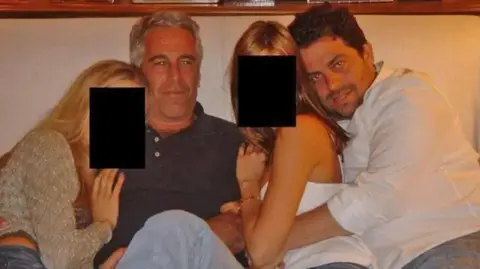
The goings-on around Epstein’s island of vice are now on the public record; Little St. James was one node in a system where the rich met to hatch plans while they celebrated their togetherness with degeneracy.
Given that princes, princesses, bankers and presidents all attended, it’s unlikely that there was anyone in the upper echelons of finance who didn’t know what went on there. And, if they did know, why didn’t they call it out?
It’s a bit like the Jimmy Savile case. Executives in the BBC knew, as did politicians. Yet they did nothing; they lifted not one finger to stop the abuse.
Savile was a media personality, presenting Top of the Pops from 1964 to 1984, who hobnobbed with the nobility, with Prime Ministers and with the powerful. During all that time he left a trail of destruction. Because of his fame and charitable work, he had access to hospitals where he abused hundreds of victims. His work in television allowed him access to children and teenagers. It was only after his death that the scale of the abuse was revealed. In 2012, the Metropolitan Police launched an investigation pursuing 400 lines of enquiry. Yet, the BBC, his employer, that gave him the fame to carry out the abuse, remains unscathed. It is still broadcasting and providing content to the masses. But why?
For a member of the public, acknowledging the depth of the rot would require shunning the BBC, not paying the licence fee, and missing out on a large part of day-to-day culture. The BBC is, after all, masterful at attention capture. It knows how to tease with enough salacious detail to engage the desire for gossip and scandal, thus creating topics for conversations by water-coolers and in pubs up and down the land. The media are expert at making us focus our attention on what they provide. They flood the space with distractions, titillation and lurid details, ensuring the public be captured.
For the vices that Savile and Epstein engaged in are the very sort of thing that keeps people interested. We are attracted to the salacious and, in this way, their vices become ours.
How the British establishment dealt with the Savile scandal is a template for the Epstein crisis. The release of 3 million heavily redacted documents (apparently there are at least another 3 million to be released), has allowed the media to focus on people who have become politically irrelevant or had already been damaged by association with Epstein, notably, Peter Mandelsohn, the Clintons, Prince Andrew, Sarah Ferguson, the academic, Noam Chomsky, Mick Jagger and Naomi Campbell.
It allows a narrative to be constructed, that there is nothing to see here. The old are irrelevant and the discredited have just been confirmed as such; all the salacious details blend into the slop that is the usual fare of tabloids and television.

Despite the best efforts of newspapers ranging from the Daily Mail to the Economist, it looks like the distraction is not going to work; it’s too important, there’s too much at stake and there are too many people with money and power who can leverage the scandal to their own ends.
Hence is revealed the much greater story, which is how Epstein and his island were a node in a power structure that manages the world through global institutions. What has been uncovered is a world-wide control system, and how Epstein and his parties were the glue that held people together, allowing relationships to form that could then develop global structures to make money at our expense. For example, the whole pandemic preparedness architecture was designed in Epstein’s entourage.
Epstein appears also to have been one of the fixers for a new global financial architecture designed around the UN’s 17 sustainable development goals by funding research teams at MIT’s Digital Currency Initiative and bringing together people who could build the necessary infrastructure from DP World to the government of Mongolia. This brings into the question the purpose of these goals, because they appear not to have arisen from scientists, but for the needs of the financiers surrounding Epstein.
The funny thing is that it is vice, not virtue, that holds all this together. They are partners in, sometimes literally, crime or, at least, the morally dubious, using the illicit to bind them.
We are supposed to behave as Stranger Things told us: yes, the powers-that-be might be involved in MK-Ultra, the occult and child abuse, but there’s nothing much you can do about it, so just accept it and move on. However, we must acknowledge that if it is vice that ruled from Little St. James, and Epstein’s townhouse in New York, if the rich and powerful are malleable because of the lure of sin and the threat of kompromat, so are we. A man has as many masters as he has vices.
Their depravities might have plumbed depths that we might have thought were not humanly possible, but our lesser vices operate to keep us hooked, as does the kompromat that might be hidden in our browser histories or our credit card subscriptions.
Freeing ourselves is to disengage from that which keeps us bound to the systems put into place by Epstein and his ilk. To save ourselves, we must put ourselves into the same position as the people who refused invitations to Little St. James and who did not engage in the vices that were on offer.
The fact that those closest to Epstein had far more depraved vices than we, does not lessen the import that it’s our addiction to our own peculiar peccadilloes that enslave us. Simply put, this Lent, don’t feed the beast.
-
Denounce usury and pay off your debts
-
Use cash as much as you can
-
Deny the media your attention, so you think of what is important to those around you and not what the media tells you.
-
Disavow expensive holidays and restaurant meals
-
Learn one survival skill, whether that be cooking, making bread or planting a seed.
This way, bit by bit, we can learn to be free.