Restore Britain: The British Right's Latest Grift
Empty Nostalgia and Jackboot Coercion from a City Man in Wellies
Goriwei
Britain has yet another force galloping in to save it. As of February 2026, the Restore Britain movement is to become a political party. So announced former Southampton FC chairman and current MP, Rupert Lowe. Restore Britain evidently promises to do what its name suggests: restore Britain. To what, exactly remains murky.
The spawning of yet another new party is a symptom of confusion on the British right, its inability to diagnose the country’s actual problems, and an unwillingness to face what must be done. When compared to the messaging coming from their opponents, say the Greens, the right’s intellectual failure becomes painfully obvious.
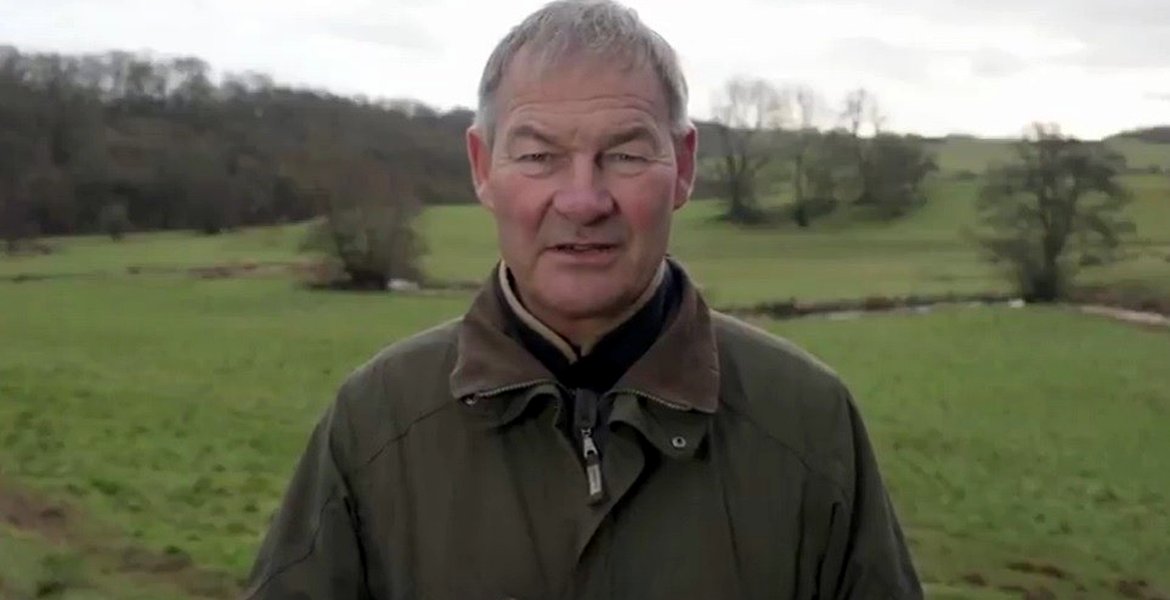
Lowe’s launch video has the aesthetics down perfectly. He stands in a muddy field, wellies and all and claims it’s ’the farm’, as soothing piano tinkling in the background. It’s a pastoral fantasy, designed to appeal to people who enjoy Clarkson’s Farm, a reality TV series about a television presenter managing a farm he probably bought on his accountant’s advice for tax purposes.
Of course, Lowe’s target demographic doesn’t own farms and wouldn’t know what to do if one landed in its lap. But the aesthetic signals authenticity. The problems start once you get past the wellies and the piano.
Rupert Lowe, despite the video, does not come from a farming background. He is a City man through and through. He worked for Morgan Grenfell, Deutsche Bank, and Barings Bank. He served as a board member of the London International Financial Futures Exchange. In fact his farm, Ravenswell, seems to be mostly concerned with training race horses. Perhaps this is the sort of business a tax-accountant might have advised Mr Lowe to invest in.
Thus the aesthetics are a thin, cheap veneer. Restore Britain’s actual policy platform is clear from the video: “If you can work, you must work.”
Lowe promises the removal of benefits to force people into employment. What happens if there are no jobs? How would a Restore Britain government ensure there are jobs that pay enough for the rent and decent food? These questions go unanswered.
Lowe’s vague economic promises to “burn away suffocating taxes”, are merely soundbites, and in any case, in a era of huge budget deficits and national debt, reducing taxes is not feasible. The platform is logically inconsistent: On the one hand he wants to “slash regulation”, on the other he is going to tell people what not to wear (banning the burka) and what to eat (ban halal and kosher slaughter).
So the essence of the platform is to force people to work, enforce policies that discriminate against Muslims and Jews and deport foreigners who won’t work or who are “illegal.” That’s it. That’s the vision.
Critically, this approach doesn’t address Britain’s fundamental economic problem: the lop-sided nature of an economy concentrated in the City of London, and the financialisation of everything, the housing market in particular, which is precisely why there is a cost-of-living crisis. He claims he wants to crush “parasitic Britain” without explicitly saying what that is. Does he mean people on benefits? Immigrants? Or the class of financiers, of whom Lowe is one, who make money on every transaction, on every sale and purchase, on every loan?
Lowe hides this economic nonsense behind a fake nostalgia and a longing for a past golden age. Lowe tells us that “Britain is not just an economy. Britain is not just an idea. Britain is not just a passport. Britain is a nation. Britain is a people, our people. And Restore Britain will never allow that to be erased.”
This warms the cockles of ethno-nationalists’ hearts because they read into it what they want, but Lowe never defines who “our people” are. He never specifies what ethnicity means in this context. He never explains precisely what it is that he will not allow to be erased. These are just empty words.
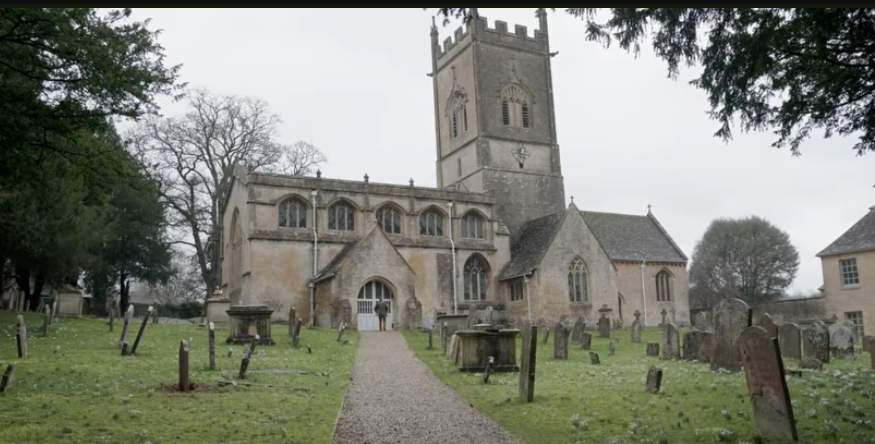
He also promises to “respect Britain’s Christian heritage” over a picture of a church, St. Michael, Withington. He also says the party will ban Sharia and “reimpose our Christian-based rule of law”. Lowe doesn’t say he’s a Christian himself, so whether he understands what he means by that is uncertain. Certainly, whether British common law is “Christian-based” would be up for debate; arguably any system that enforces usurious contracts breaches the traditional Christian ban on charging interest. No doubt, no one at Restore Britain has bothered thinking this through. Perhaps Lowe is just counter-signalling Islam and striking a pose for the people who fall for this sort of stuff, because they feel they have lost something, but can’t actually identify what it is that’s missing.
In any case, the veneer soon self-deconstructs. He confines British identity to “heritage”, the past, like a childhood toy you’ve long since lost. It’s unclear whether he thinks this heritage has any place in shaping the future, or if it’s merely something to be “celebrated” in the way we celebrate Guy Fawkes Night or, these days, even Christmas: a commercial ritual we perform without knowing why.
This contrasts markedly with the victory speech given on 26th February, 2026, by one Hannah Spencer who won the seat of Gorton and Denton for the left-wing Green Party in a by-election. She laments the lack of well-paying work:
“Working hard used to get you something. It got you a house, a nice life, holidays, it got you somewhere. But now working hard, what does that get you? Because talk to anyone here and they will tell you. The people who work hard but can’t put food on the table, can’t get their kids’ school uniforms, can’t put their heating on, can’t live off the pension they worked hard to save for, can’t even begin to dream about ever having a holiday. Because life has changed. Instead of working for a nice life, we’re working to line the pockets of billionaires. We are being bled dry.”
This is a far more seductive pitch than Lowe’s. Whereas Lowe wants to take people’s benefits away if they don’t work, Spencer argues that working hard should get you a degree of material comfort. Lowe offers pain: hard work and forced deportations. Spencer promises affordable food and holidays.
The Green Party’s policy prescriptions almost certainly won’t give rise to cheaper food and holidays, in fact, they’ll embed the opposite. However, Spencer has recognised the problem: work no longer provides material security. Lowe, by contrast, seems to think the problem is that people aren’t working hard enough, and that the solution is coercion.
One of these diagnoses resonates. The other asks people to double-down in a system that has already failed them, while performing the celebration of a heritage that will soon be completely forgotten.
This isn’t the first time the British right has fallen for a flash-in-the-pan movement with slick aesthetics and empty promises revealing a political constituency that is gullible, easily distracted by aesthetic signalling, and unable to distinguish between genuine analysis and theatrical performance.
Restore Britain is the latest political venture sitting alongside, Reclaim, Reform and Advance, that has no coherent analysis of what’s wrong with Britain or how to fix it. It can identify symptoms, economic insecurity, cultural dislocation, alienation from institutions, but it cannot or will not trace those symptoms to their causes. Creating a safe, wealthy and functioning country requires not only policy, but the people with the character to implement it.
People like Lowe come from precisely the milieu that financialised the British economy and made so much unaffordable. These are the people who gained from the privatisation of public utilities and their subsequent degradation. Lowe has not disavowed any of this. He has not explained how his background informs his politics, or whether he sees any problems with the system that enriched him.
Telling the natives that their heritage will be “celebrated” is only a gloss over the core message which is to force people to work harder to support a finance-heavy economy that serves people like Rupert Lowe.
Tracing Britain’s problems to their causes would, on the one hand, implicate the very people, like Rupert Lowe, who are now posing as saviours while, on the other hand, expose the moral failings of the very people who complain about immigrants and shirkers. Of course, this can’t be allowed.
There are legitimate grievances to address. Ordinary people in Britain face economic precarity and many feel that their culture is withering or already defunct. A serious right-wing platform might regulate the financial institutions, have an industrial policy that aims to provide high quality jobs that pay a family wage, reverse laws that encourage social breakdown, say banning gambling, cracking down on drug use, making divorce more difficult and limiting abortion, while funding cultural institutions such as libraries and theatre that familiarise people with the national story.
Such policies would address the economic insecurity and cultural dissolution that Restore Britain signals that it cares about. But it can do none of these things because that would disrupt business models and so upset the current economic order. Thus it has nothing to address the problems and offers instead nostalgia for an undefined past, forced work in an economy that doesn’t reward it, and the deportation of scapegoats.
A movement led by beneficiaries of the current system cannot credibly claim to challenge it. And a movement that offers only coercion and nostalgia cannot build a future.
The British right isn’t just in a mess, it isn’t only doomed, but worst of all, it’s a joke.