The Cult of Trump has Misfired
How the Holy War Failed
Goriwei
The Trump administration’s attempt to recruit Christianity has had unintended consequences. It certainly hasn’t made the regime look more sacred; rather, it has made the regime look vulgar, incoherent and intellectually thin. It has emphasised to serious Christians, especially Catholics, that Christianity cannot be reduced to memes, theatrical props, and war propaganda.
At the start of his administration, Trump instituted a “Faith Office” which, as I pointed out in a previous article, was not so much an acknowledgement of religious truth, as a cynical effort to hijack religious communities, and Christianity in particular, to the purposes of Trump’s state. As head of the Faith Office, the President appointed Paula White, a heretical proponent of the prosperity gospel. She has said, in a clip from PBS NewsHour that saying no to Trump was saying no to God.
Indeed, there has been a concerted effort to spread images of Trump surrounded by pastors to give the impression he has been indeed appointed by God. In May 2026, a group called “Pastors for Trump” blessed a 22-foot golden statue of the President at Trump’s Mar-a-Lago golf course.
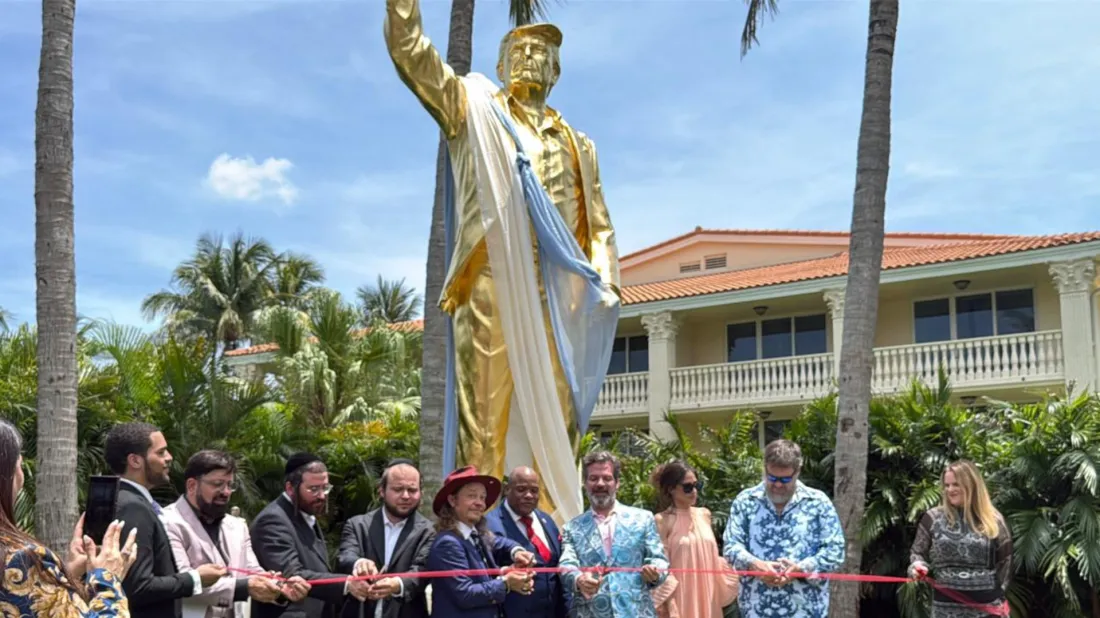
Figure 1: Trump as the golden calf of Exodus
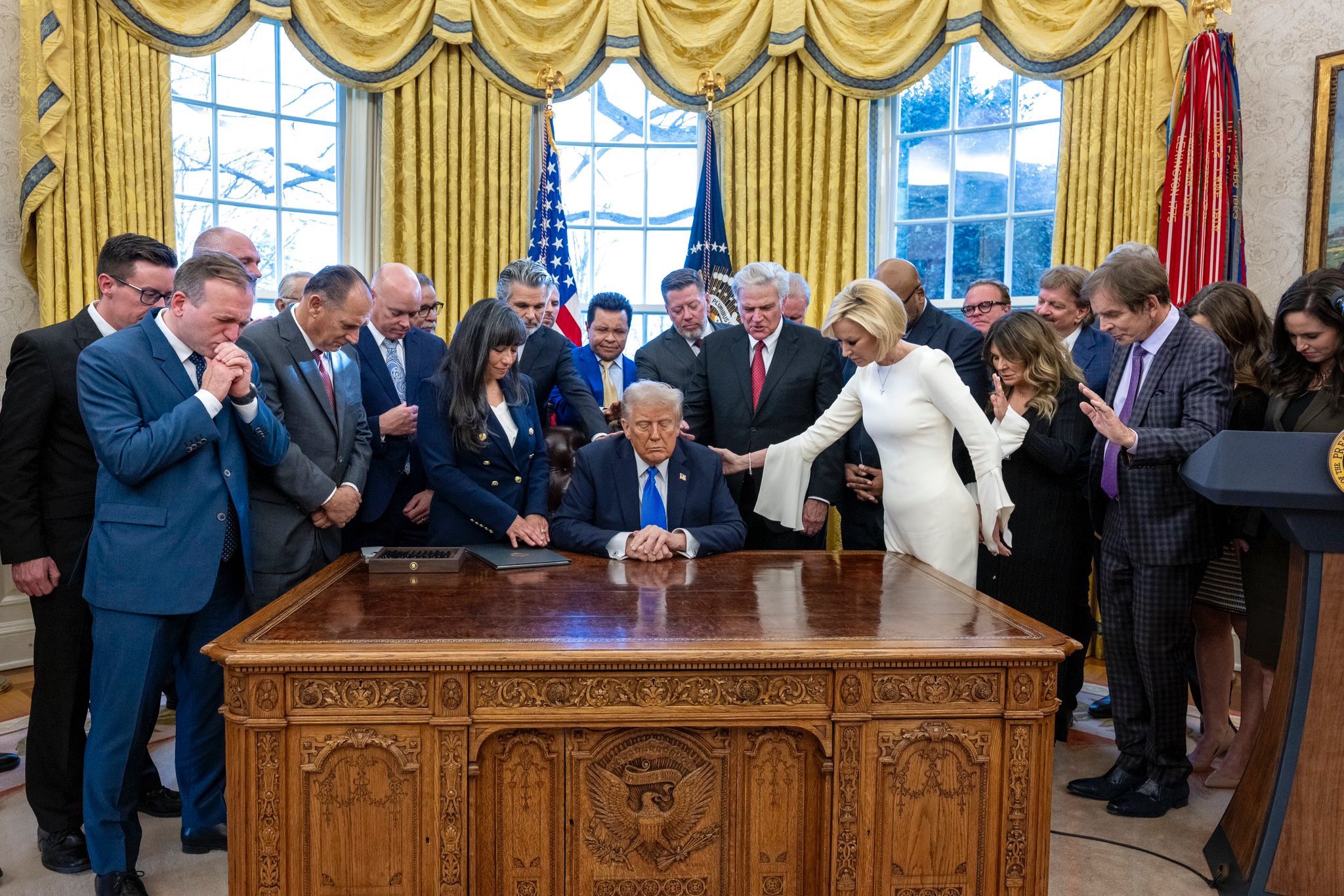
Figure 2: Trump LARPing as the Anointed One
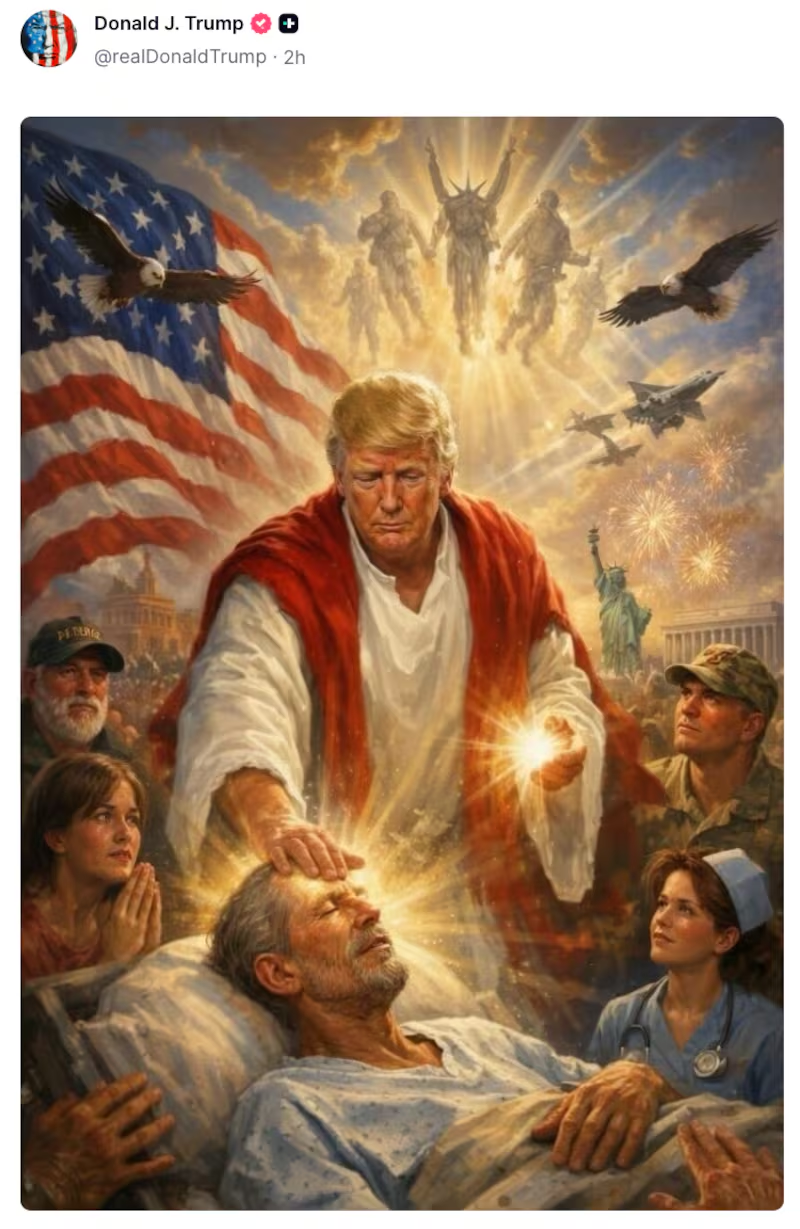
Figure 3: Trump with soldiers and a demon behind him.
These images may serve to support a narrative that Donald Trump is divinely appointed, but they communicate kitsch, vanity and blasphemy. There is a long tradition of sacred art and iconography in the Catholic and Orthodox churches which is the bar to which Trumpian kitsch is naturally compared. It comes up short. Catholic commentator Michael Matt of The Remnant, who calls himself a conservative, has suggested that this only serves to make conservatism look ridiculous.
But it doesn’t stop at bad taste. It becomes a question of life and death when Pete Hegseth, Trump’s Secretary of War, attempts to invoke Christianity in support of the regime’s war against Iran. This has invited comparison to end times prophecies promoted by some US evangelicals. Hegseth has a number of tattoos, which given his position and rhetoric, signify the crusades. His “Deus vult” tattoo is probably meant to invoke the call to the First Crusade in 1096. The Jerusalem cross tattoo points to the Kingdom of Jerusalem established by Godfrey of Bouillon in 1099. Pete Hegseth, himself, quoted a passage allegedly from Ezekiel promising violence at one of his worship services, but it was a made-up quote from the Tarantino movie “Pulp Fiction”.
The Trump administration’s religious war narrative is not gaining that much traction among the general population. Perhaps it’s because it is intellectually incoherent, or that the theatrical props they have chosen aren’t quite up to scratch, or because Pete Hegseth is unconvincing as a prayer leader. Perhaps it’s because the main characters in the Administration don’t come across as religiously committed.
Certainly, Trump claiming that his pastor is Paula White, whose television show involves persuading people that they can get “graces” if they send her money, gives her operation the air of religious hucksterism. It may be that this causes many people to affirm their view that religion is, at best, a salve, or more probably, a farce, for the feeble-minded. If a good show, a few memes, and misquotes of the Bible may then be enough to send a horde to die in Mesopotamia, by the rivers of Babylon, as it were, then the whole thing can’t be taken seriously.
Even active service personnel have filed complaints as the Administration has tried to frame the Iran war as divinely ordained. According to the Military Religious Freedom Foundation, one NCO said that his commanding officer had told him that ‘President Trump has been anointed by Jesus to light the signal fire in Iran to cause Armageddon and mark his return to Earth’.
Outside the narrow Evangelical pastors around Trump, the Administration’s rhetoric has encountered hostility. Cardinal Pizzaballa, the current Latin Patriarch of Jerusalem said “the manipulation of God’s name to justify this and any other war is the gravest sin we can commit in this time.” Archbishop Timothy Broglio of the U.S. Archdiocese for the Military Services said that the US government’s desire to go to war against Iran likely not justified under Catholic teaching on legitimate defence. Pope Leo XIV, who is a US citizen by birth, criticized the Iran war.
This has caused apoplexy in the media mouth-pieces of the Administration. Anti-Catholic rhetoric has exploded. Andrew Klavan, on his Daily Wire show, called the Pope’s comments “girly nonsense”. Doug Wilson, Pete Hegseth’s pastor, has proposed banning public displays of Catholic devotion. Senator Ted Cruz, has criticized Catholic influence as harming conservatism in the US.
Following this, Marco Rubio, the Secretary of State, made a quick trip to Rome, whatever the true purpose of the trip, its sudden announcement came across as a desperate attempt to mend deteriorating relations with the Holy See. The Vatican press office says diplomatically that meeting was “regarding situations on the regional and international levels, with particular attention given to countries experiencing war, political tensions and difficult humanitarian situations as well as the need to work tirelessly for peace.” The Holy See is therefore not aligning itself with the US’s warmongering.
It seems that the US administration doesn’t have any feel for religion. Despite claiming that he has a pastor, Trump is not able to articulate religious ideas, nor has Pete Hegseth and the pronouncements of so many of the pastors surrounding Trump sound alien to Christians not sharing their world view, including Catholics.
So, the administration’s religious posturing, pushes many away. Their statements, prayers and memes come across as insincere, Pharisaical even, and the cynical attempt at manipulation fails, because the administration or their public relations advisers do not have the intellectual religious education to frame it to be broadly appealing.
For example, when Catholic theologians argue theological points, they argue not only from Scripture, but from writings of the Church fathers and the Magisterium as a whole. Apostolic Christianity has almost 2,000 years of intellectual development, of exegesis behind it which cannot be brushed aside by political spectacle. Apostolic Christianity also possesses a mystical tradition that deepens doctrine. Sanctity and intellect support one another. A cleverer attempt to co-opt religion would have to deal with all of this.
There is also the Catholic theological argument. That is that the Church is not a mere human institution, but was founded divinely by Jesus Christ and that the Holy Spirit guides it. It is the Catholic position that the “gates of hell shall not prevail against it”. If that is accepted, then the Church as a whole would hold its line against political whims which deviate from the will of God.
The statements of many Catholic religious, including Pope Leo XIV refer to “just war” theory; Catholic just war theory is not pacifism, but it does say if war is to be waged, it must be openly declared by a legitimate authority, the cause must be just and not for self-interest, the aim must be a just peace to follow. References to crusades, vengeance or manifest destiny are no substitute for moral reasoning. The attempt to goad Christians to violence has failed.
Detached from sacramental authority, apostolic succession, and a binding Magisterium, certain forms of evangelical politics are especially vulnerable to a kind of state-captured civil religion that serves to support the aims of a regime. Where church authority is weak, charismatic personalities can present themselves as prophets and pastors and can be co-opted for political aims.
Having rejected the Magisterium, including the scholastic tradition of St. Thomas Aquinas, who most developed just war theory, there are branches of Christianity are more likely to allow themselves to be coopted to state aligned aims. The administration’s religious supporters seem uninterested in the serious Christian moral tradition on war. They invoke crusader symbols, but they do not offer anything resembling a just-war argument.
The actions of the Trump administration may have stirred a renewed concern for how Christians should discern the truth of religious messaging. Whatever one’s political preferences, whether war, LGBT, social justice and so on, to align with truth these must be tested against intellectual tradition in its entirety. A modern materialist secularist may have the view that religion is superstition for stupid people. Yet, an attempt to instrumentalise it, is having effects that the architects never planned nor foresaw.
A state might try to use religious language, manipulate religious imagery, surround itself with pastors, quote Scripture and drape its wars in eschatological rhetoric, but it cannot counterfeit true theological authority. Against 2,000 years of intellectual tradition, Apostolic Succession, moral reasoning and ecclesiastical authority, the Trump administration’s religious theatre looks vulgar and intellectually wanting.
An unintended blessing arising from this vulgarity may be that some Christians will rediscover the need for true discernment. Not every invocation of God is holy. Not every pastor is a prophet. Even the devil can quote Scripture when expedient. Not every war is just because someone puts a Bible near it. True religion must be tested against the fullness of Christian tradition, not against the fleeting needs of a secular state.