Dublin: the fading simulacrum.
Notes from a branch office.
Gorewei
You found it odd that there was no immigration officer checking passports at Dublin ferry port. You have, after all, just entered the EU from a Britain that has left, but it was as if you’d just driven from Chigwell to Epping; no one cared. A suspicion flashes through you that Great Britain and Ireland are one and the same.
It was not long before you were driving along the Liffey, where glass buildings were announcing themselves proudly along the waterfront. They are labelled “J.P. Morgan” and “State Street” and, yet another, “Heineken”.
At the very least, you expected to be confronted with something that signified Ireland, even if it were gimmicky kitsch, a harp, say, or an advertisement claiming Guinness is good for you, perhaps even a game of Gaelic football. Your experience so far is that you could be anywhere: Amsterdam, Melbourne, Singapore or Vancouver.
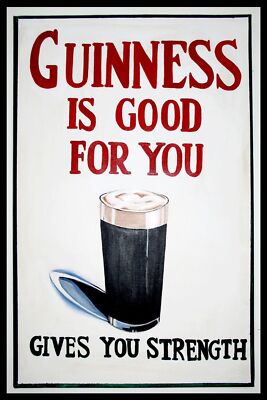
Perhaps not always.
It’s as if you are nowhere and everywhere; like Changi airport, a liminal space where all flows of international finance meet. Driving further does not dispel the feeling that it’s just another branch office of the international cartel that offers “gassy beer, page three, two weeks in España and Sunday striptease”, in the words of British rock group, Dire Straits. It’s La Défense and Canary Wharf.
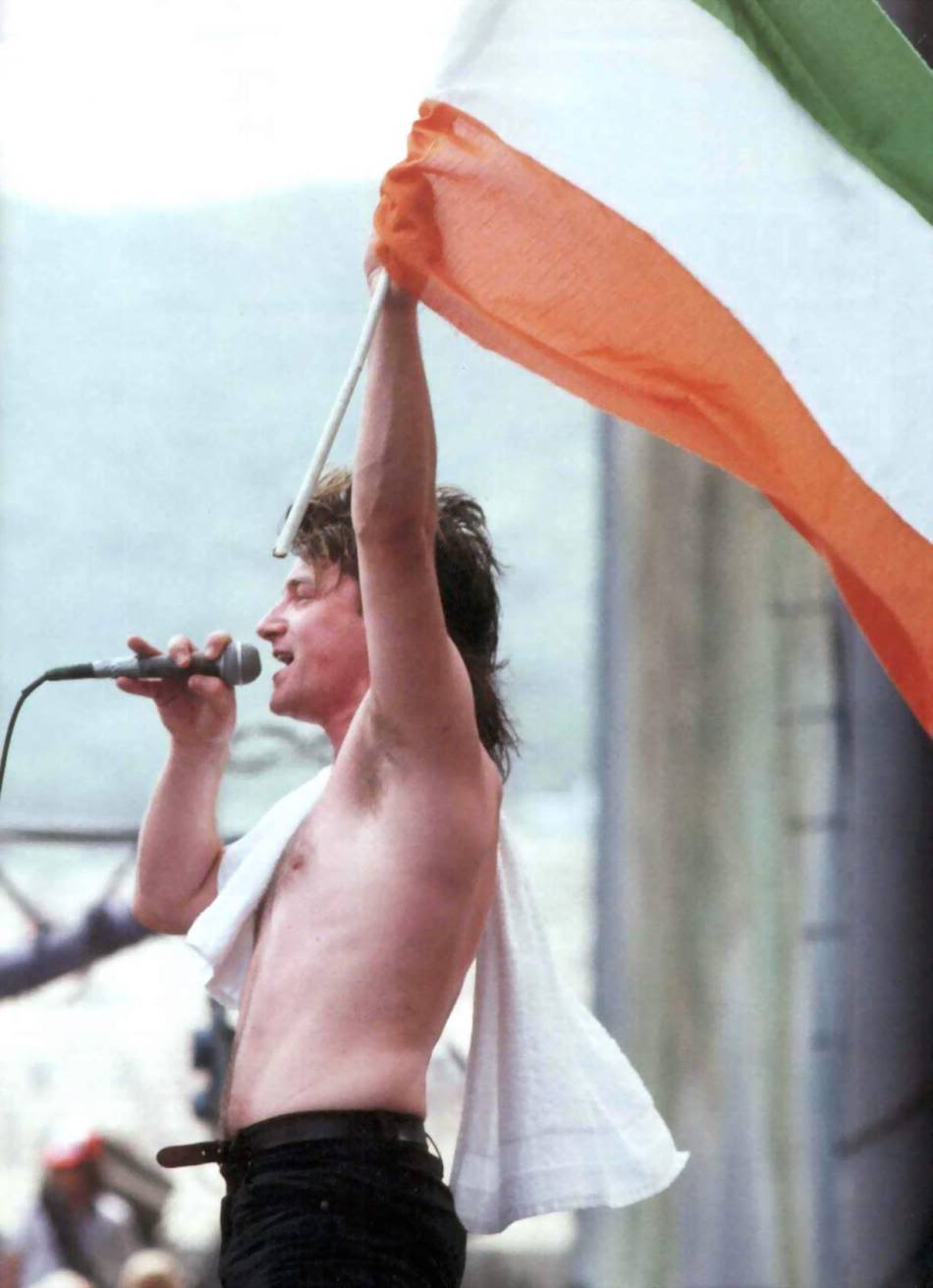
Your view of Ireland has been shaped by smatterings of history, such as, Michael Collins being shot in 1922, and by Eamon de Valera’s dissent from the Anglo-Irish Treaty, because he wouldn’t swear loyalty to the king. You recall the Black & Tans and the killing of 30 people on Sunday, 21st November 1920, Bloody Sunday. On 30th January 1972, British forces killed 26 unarmed civilians in Derry. This is the second Bloody Sunday. The image of Bono running up and down a stage waving a tricolour and singing Sunday Bloody Sunday is etched in your mind.
De Valera was devout. He had contemplated taking holy orders, became a secular Franciscan and was buried in a Franciscan habit. That was how the Republic was founded. The modern Dáil, though, has other ideas. It lifted the ban on Playboy magazine in 1995. A slew of softcore porn was legalised in 2011. Other nowhere places, such as Dubai International Airport, have more decorum.
You follow the GPS directions and feel as if you are driving around and around the centre of Dublin. You slam on the brakes when the software indicates that you are at the entrance to the accommodation, Trinity College. The security guard gives you directions. You ask him to repeat himself, not because you didn’t understand him, but because you assumed that you wouldn’t have, that he would have spoken in a thick Dublin brogue. He doesn’t. He waves you in. The campus is maze-like. It traps you. It’s going to corner you until you nod in agreement.
Behind a desk in the “Accommodation Office” are two female undergraduates. Their movements are slow, their eyelids droop. Their hair is dyed a colour not found in nature. They have half-moon septum piercings, loose-fitting tank-tops that expose bra-straps. As they stare at their computer screens, you scan the counter. Of course, there are rainbow flags. You have never been to the Trinity College accommodation office, but you’ve been here a million times; it’s the same as everywhere else.
There is a cacophony of noise from the tourists using the summer break to stay in student accommodation. No one seems to agree on what was booked. The female undergraduates scroll and click and then mutter something which might be: “computer says ’no’”.
You try to suppress your increasing frustration behind a demeanour that exhibits calm. You assume you fail.
Eventually, you acquire a room key. You leave the office with relief, welcoming the relative calm of “Front Square”. You drive to another so-called “square” and park the car where there are no signs saying you cannot. From there you remove your bags, and heft them through the campus that exudes Georgian neo-classical revivalism, an international style from across the Irish sea. It is not pompous, but rather a bored yawn that links ancient paganism with the enlightenment and was then plonked in Dublin as an after-thought.
As you make your way to your promised room, you notice a preponderance of Americans of a certain age in vaguely hippy clothes, boomers, or, more accurately 68ers, les soixantes-huitards, as younger generations of French sneer. Limps, stiff backs, a few extra pounds to heave up their narrow staircases, they cannot regain the youth which is long gone. Perhaps they are attempting to connect with their presumed Irish roots. Your experience so far suggests this might be difficult; State Street, J.P. Morgan, Heineken and Hanoverian overlords do not promise an authentic Irish experience.
You find your room. Dim, drab. A feeling of oppression. There is barely enough light to unpack, let alone to read. Whatever students do in this room during term time, it is unlikely to involve books. You leave as fast as you can.
The College of the Holy and Undivided Trinity of Queen Elizabeth near Dublin is, despite its official name, right in the centre of Dublin and not even a short walk from the pubs, clubs and tourist traps of Temple Bar where you intend to complete a mission: to have a pint of Guinness which, you have been assured many times, tastes better in Dublin than anywhere else in the world.
The streets are thick with bodies; writhing human flesh. It reminds you a bit of Trastevere in Rome or Soho in London, with the exception that, locals, Romans and Londoners, respectively, frequent those places.
Most notably, there are many groups of drunk young men shouting. You can’t make out what they are shouting about. There are skateboarders and cyclists weaving in and out of the crowd never quite hitting the pedestrians. There are the international style “Irish bars”, with the novelty of being in Ireland. They offer Guinness, but you see through the plate-glass windows that they are standing-room only. The thumping sounds of amplified music escape from these bars and mingle with the noise of the tourists on the street. People of a certain age are shifting their extra pounds out of time with the beat of live bands. Their lips are moving. Are they singing along to U2, the Cranberries, Enya? You can’t be sure.
You need to escape the crowds to find somewhere to have a Guinness, so keep walking until you make it to the relative quiet of the opposite side of the Liffey. It is mostly silent. There are a few places serving the food of international nightlife: pizza and kebabs. Eventually, in what seems to you like a side-street. You find a sedate bar. It’s not even a pub, it calls itself “The Gin Palace”. There are a slew of taps. Heineken stands out proudly among the offerings. You order a Guinness, returning to your table with the dark black liquid topped by a creamy, tawny head. Brimming with expectation, you take a sip.
It tastes of nothing.
A hint of bitterness comes from the roasted barley, but it’s at the front of the palate, but as you swallow it disappears into the blandness that is characteristic of Coors or Anheuser-Busch’s Budweiser. There is really no mouth feel except from the artificially injected nitrogen.
You finish the pint reluctantly; it was a waste. In the hope of flavour, you order a red ale. As it pours you notice the same nitrogen injection. The barman places it in front of you. You take a sip. It has the same nitrogen mouth feel and even less roasted barley bitterness than the Guinness. That too was a waste.
Four subcontinental gentlemen walk in and order four Heinekens; they understand Dublin better than you.
The next morning in Trinity College you are woken up by someone speaking loudly outside the window of your room. You peer out: a female undergraduate is giving a talk to a group of 68ers and young females who, you presume, fancy themselves as undergraduates. From your window you see about eight similar tour groups spread across the square; you are an exhibit in a tourist attraction.
Trinity College is nothing as you expected. It was founded by Elizabeth I, the illegitimate daughter of Henry VIII and Anne Boleyn to brow-beat the Irish Celtic and Catholic lords to accept Protestantism and, more importantly, the legitimacy of her birth, her suzerainty and the theft of Church property by her father’s commissioners.
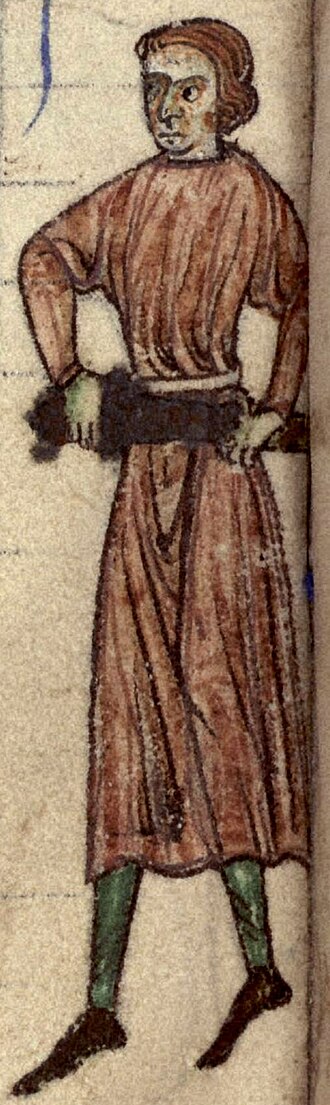
Richard de Clare, Arrived in 1167. Never left.
You make an escape. First stop: Books Upstairs, Dublin’s oldest independent book shop, founded in 1979. It’s not old, but the warren of rooms containing books gives it the feel of authenticity. You make your way to the bookshop cafe. You note the barista sports a half-moon septum piercing, uncombed hair, and loose fitting floral clothes. Perhaps she is also an undergraduate at Trinity College. You take your flat white and choose a table by a window. You stare at the buildings opposite. A rag is forlornly hanging from a street lamp. The colours on the flag crystalise its meaning to you. A torn, battered Irish tricolour. Does no one care?
You leave and thread your way through the tour groups that cram College and Dawson Streets making them almost impassable. You pop into Holland and Barratt, wholly owned by Luxembourg asset manager, Letter One Holdings S.A, chaired by Baron Evan Mervyn, Baron Davies of Abersoch, CBE. The very friendly shop assistant, no piercings, no tattoos, dressed in plain colours, and of probable middle-eastern extraction directs you instantly to what you want. You are grateful.
The tourist groups peter out as you approach Hodges Figgis, perhaps Dublin’s best book shop. As soon as you are inside you can tell by the tell-tale hand-written book recommendations that it’s one of Britain’s ubiquitous Waterstone’s, owned by Elliot Investment Management L.P., West Palm Beach, Florida.
You wander around the store and realise that most of the books you want, you’ve already bought. You almost bump into an attractive young woman again of likely middle-eastern extraction. You move from Sci-Fi to History and there she is again. You move from Psychology to Spirituality and there she is again.
You make your way to the till. The teller has inhumanly coloured hair, a half-moon septum piercing, a long flowing skirt, and an inch of bare midriff. You pay for the commemorative bookmark in cash and turning to leave you see the same attractive woman at the next teller. She catches your eye. As you exit the store you almost walk into her.
You need lunch. You raise your eyes from the pavement and immediately see, Carluccio’s, the London-based chain, owned by Boparan Restaurant Group, and the Ivy, also London-based, known as a hang out for celebrities and ultimately held by Caprice Holdings Ltd. There are a number of hippy, faux-alternative, vegetarian-leaning takeaways, one of which is Joe & the Juice, a chain owned by Swedish private equity fund Valedo. You choose one that you hope isn’t a chain. From the young woman behind the counter, inhumanly coloured hair, a loose tank-top with a bra strap showing, and an inch of bare mid-riff showing part of a tattoo, you pointedly order a chicken sandwich. You note that on the menu, by one of the smoothies on offer, one that contains watermelon, a Palestinian flag is displayed.
Dublin from the 10th century was a Viking town and the centre of the slave trade, moving Irish and Welsh captives across the Baltic through Kiev to the Seljuk Turks or across the Bay of Biscay to the Caliphate of Cordoba. The English weren’t really anywhere around until Diarmait Mac Murchada, deposed as King of Leinster in 1167, appealed to Henry II Plantagenet to regain his kingdom. Henry was busy at war in France, but Henry’s vassal, Richard de Clare, Earl of Pembroke, known as “Strongbow”, seized Dublin. After that, the English never left; you will note that next time you have a ‘Strongbow’ cider.
Some sort of marketing gimmick.
You’ve had enough. It’s time to seek an exit from Dublin. You make your way back into the Trinity College campus, avoiding the throngs of tourists, and circumnavigate a red warehouse that contains something called the “Book of Kells Experience”. It sits incongruously in the middle of the Georgian buildings diminishing the College and the Protestant Hanoverian kings that the architecture is named after.
The traffic out of Dublin is crawling. It’s as if the city doesn’t want to let you go; you haven’t paid enough tribute; you haven’t had enough pints of Guinness and Heineken. It’s as if it wants to keep you in stasis until you comply. You try to press on, but your foot hardly touches the accelerator.
The suffocation of the city sits upon you as you enter the dramatic highlands and narrow roads of the Wicklow mountains. There are no signs for Guinness or Heineken. There are no undergraduates guiding 68ers.
Glendalough, the valley of the two lakes, hidden, serene, the home of St. Kevin and one of the most significant establishments of Ireland. The stone towers, ruined churches and the remains of a monastery that provided a sanctuary, safety and leadership to the surrounding land speak of another Ireland. The English destroyed it in 1398 such that the English-controlled diocese of Dublin could take precedence.
On the lower lake, The sun’s rays dance upon the ripples. You stand mesmerised for a while. You walk towards the upper lake where children are splashing and laughing. You order a Mr. Whippy from an ice cream truck.
You’ve seen two parts of Ireland; the shards of each scratch and tear against one other. You wonder whether Bono running up and down the stage waving a tricolour, Sinéad O’Connor’s Rebel Song and the Cranberries’ Zombie were just marketing gimmicks and, if so, what the Troubles were really all about.